TEST RUN OF THE LOFOTR VIKING MUSEUM APPLICATION
Earlier, we shared that a new Lofotr Viking Museum app has been developed, an interactive experience showing how the landscape at the hights of Borg (outdoor museums ground) might have looked during the Viking Age (around AD 1000) and the Early Middle Ages (around AD 1100).
Three reconstructed houses are included, and several museum artifacts have been digitally recreated and placed in their original archaeological contexts.
In September, we carried out the second test run of the app. Test participants used tablets to explore the simulation, walking through the landscape, entering the chieftain’s house, and discovering artifacts where they were originally found by archaeologists.
Throughout the simulation, information points provided stories and insights through audio, text, video, and even interactive filters, allowing users to switch between different reconstructions of the Viking chieftain’s house roof based on archaeological interpretations.
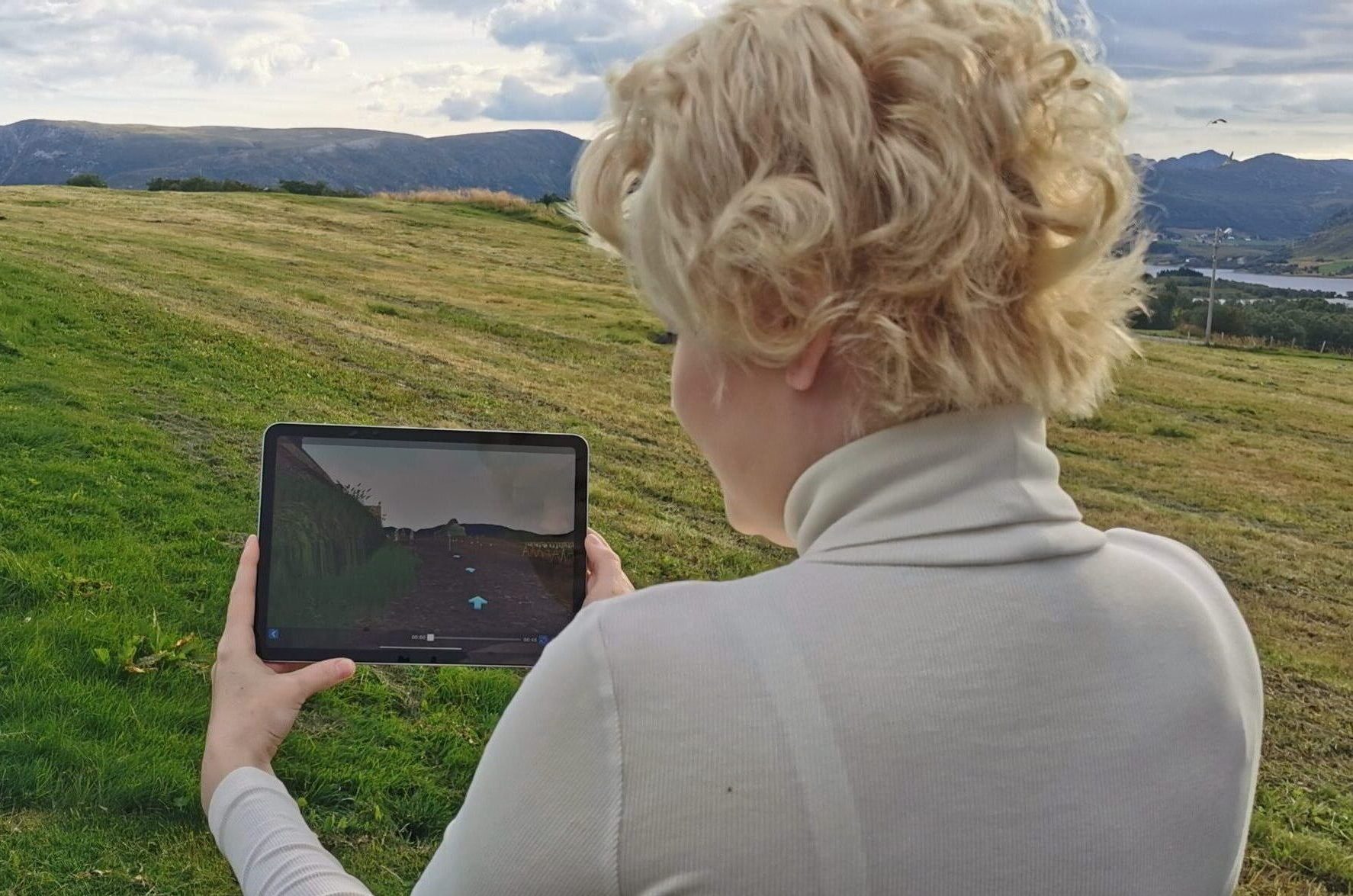
Fig. 1. Elin Tinuviel Torbergsen is testing the app. She is exploring the simulation from a human perspective, so the houses appear at the same level as they would in real life. The arrows indicate suggested ways to navigate through the app (Photo: Fink R. Juhl).
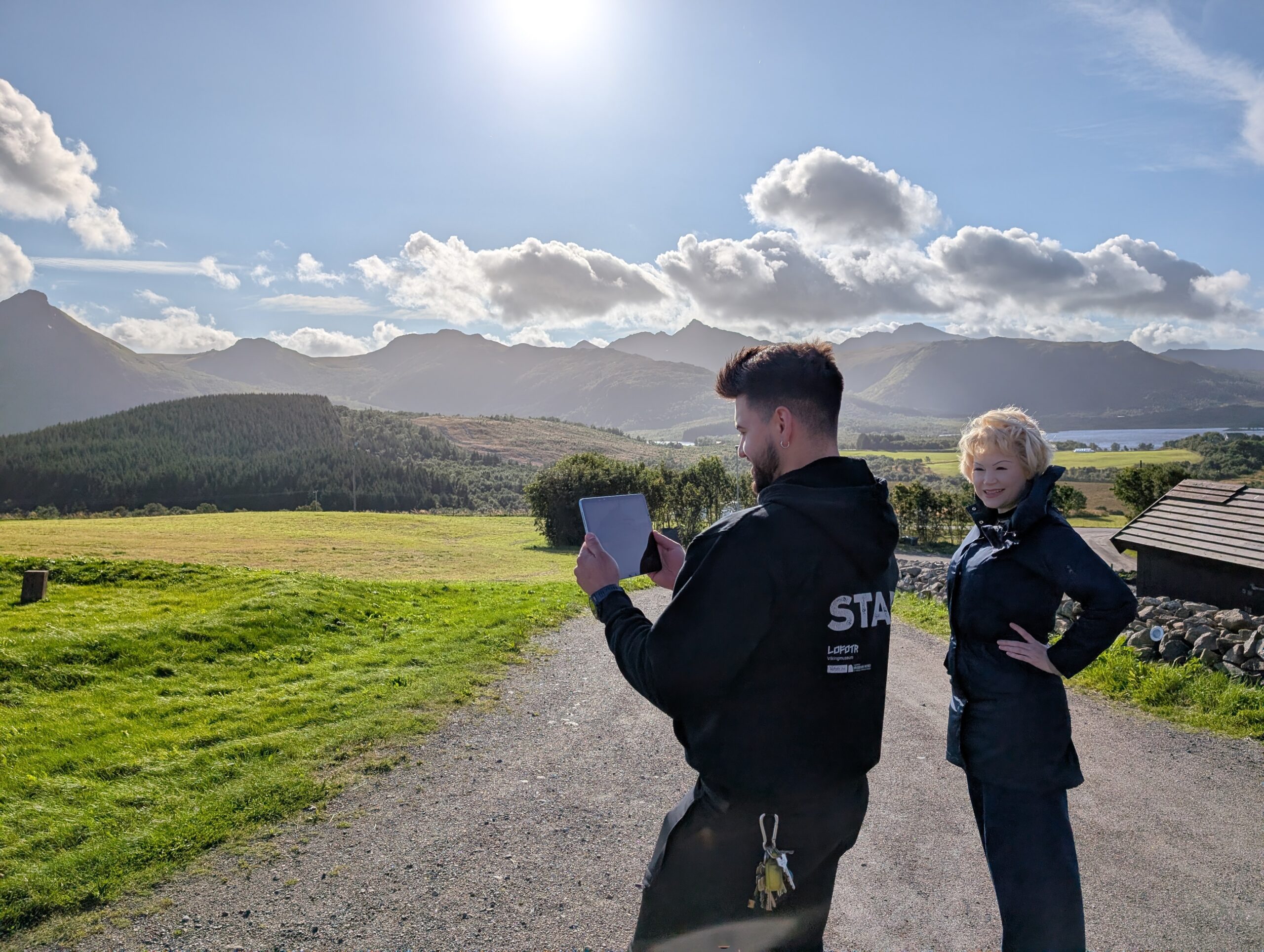
Fig. 2. An employee at the Lofotr Viking Museum is testing the app. Elin Tinuviel Torbergsen observes how the person interacts with it, whether he hesitates, pauses, or struggles with certain information points, and takes detailed notes on these observations. Afterwards, the test participant fills out a survey about his experience. Altogether, this feedback helps improve the app for the next test run. So far, two rounds of test runs have been carried out, but several more are needed for the app. (Photo Kjersti Robertsen).