THE OPEN GARDEN & THE LIVING ARCHIVE
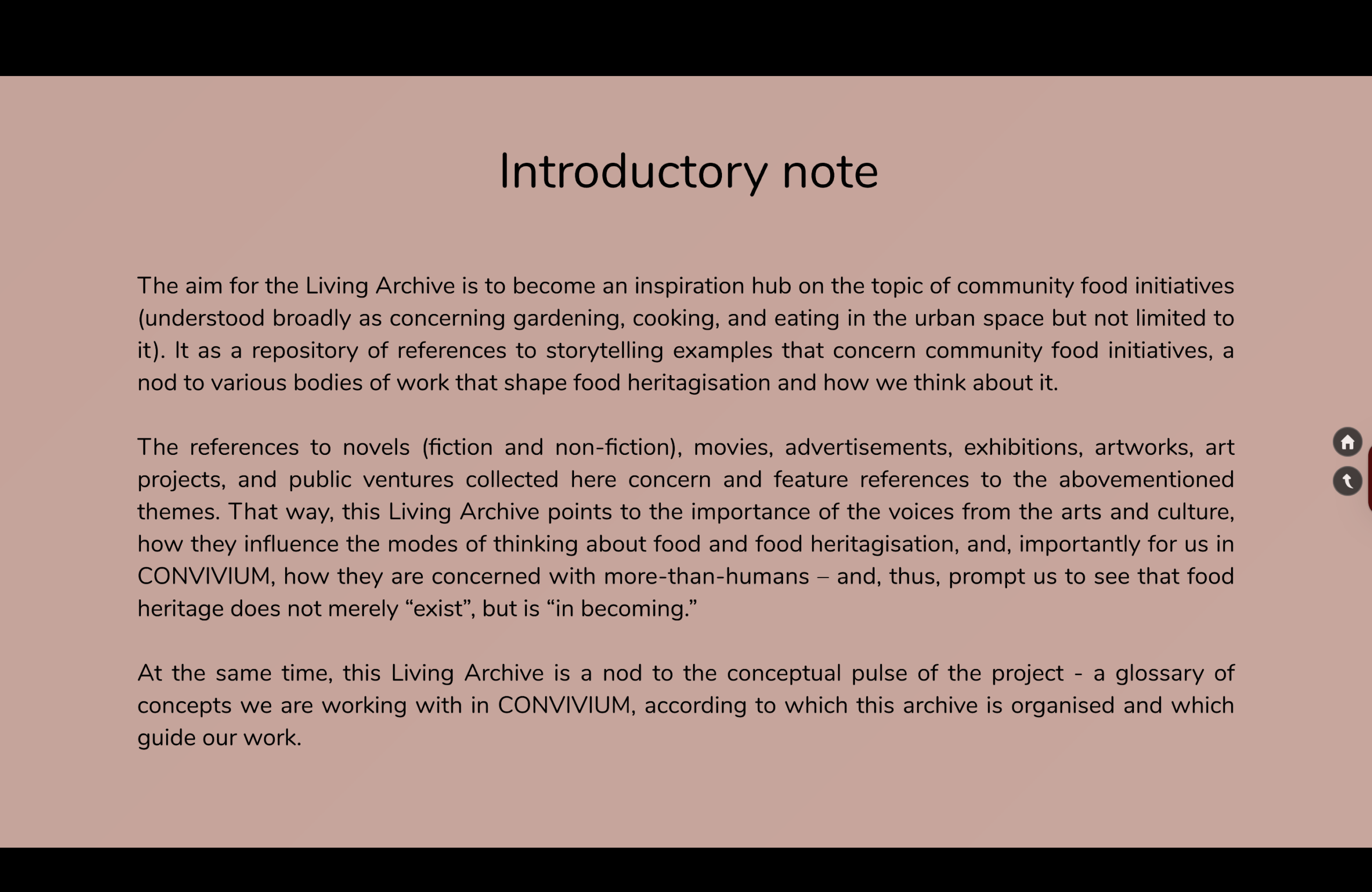
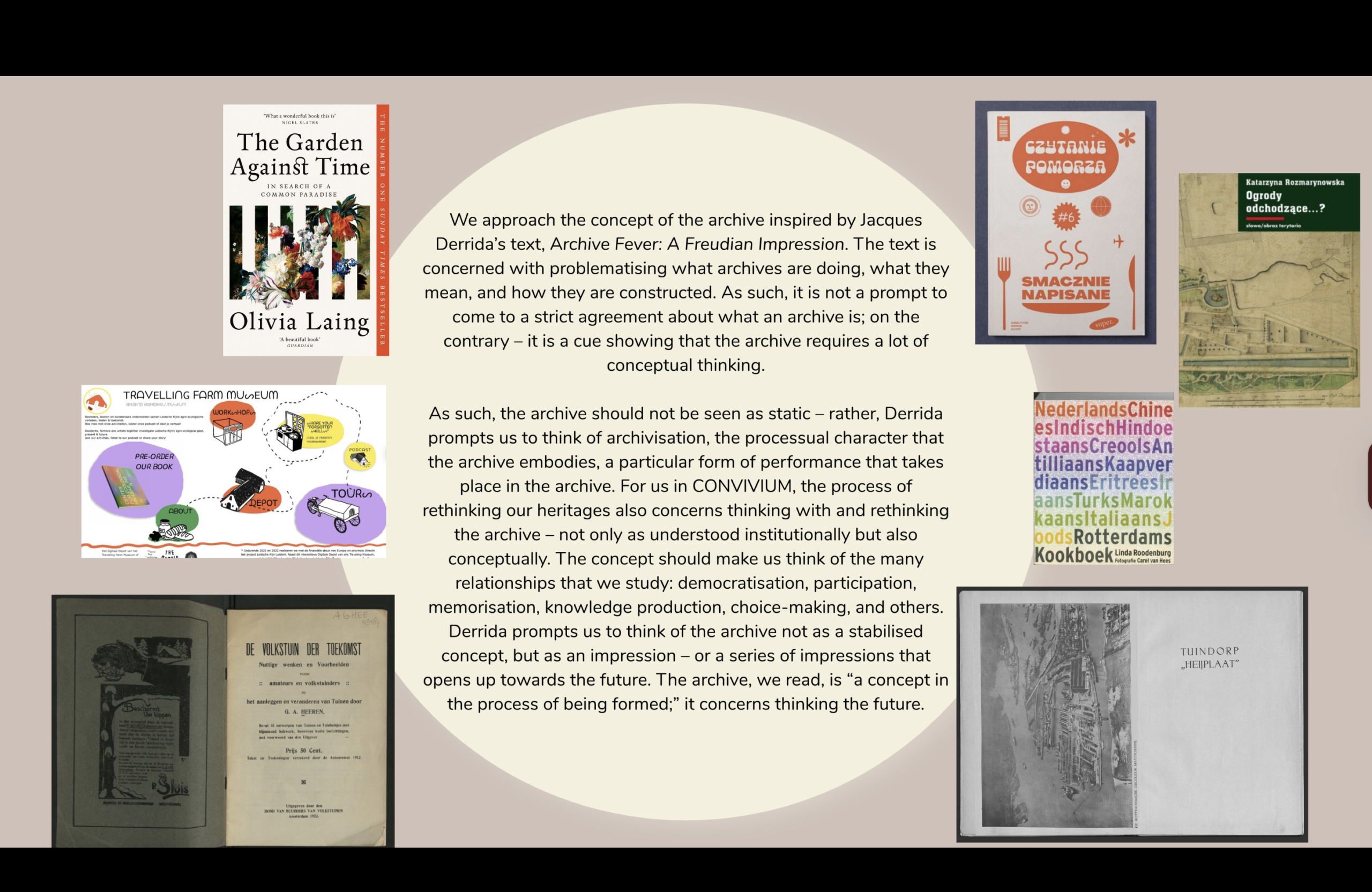
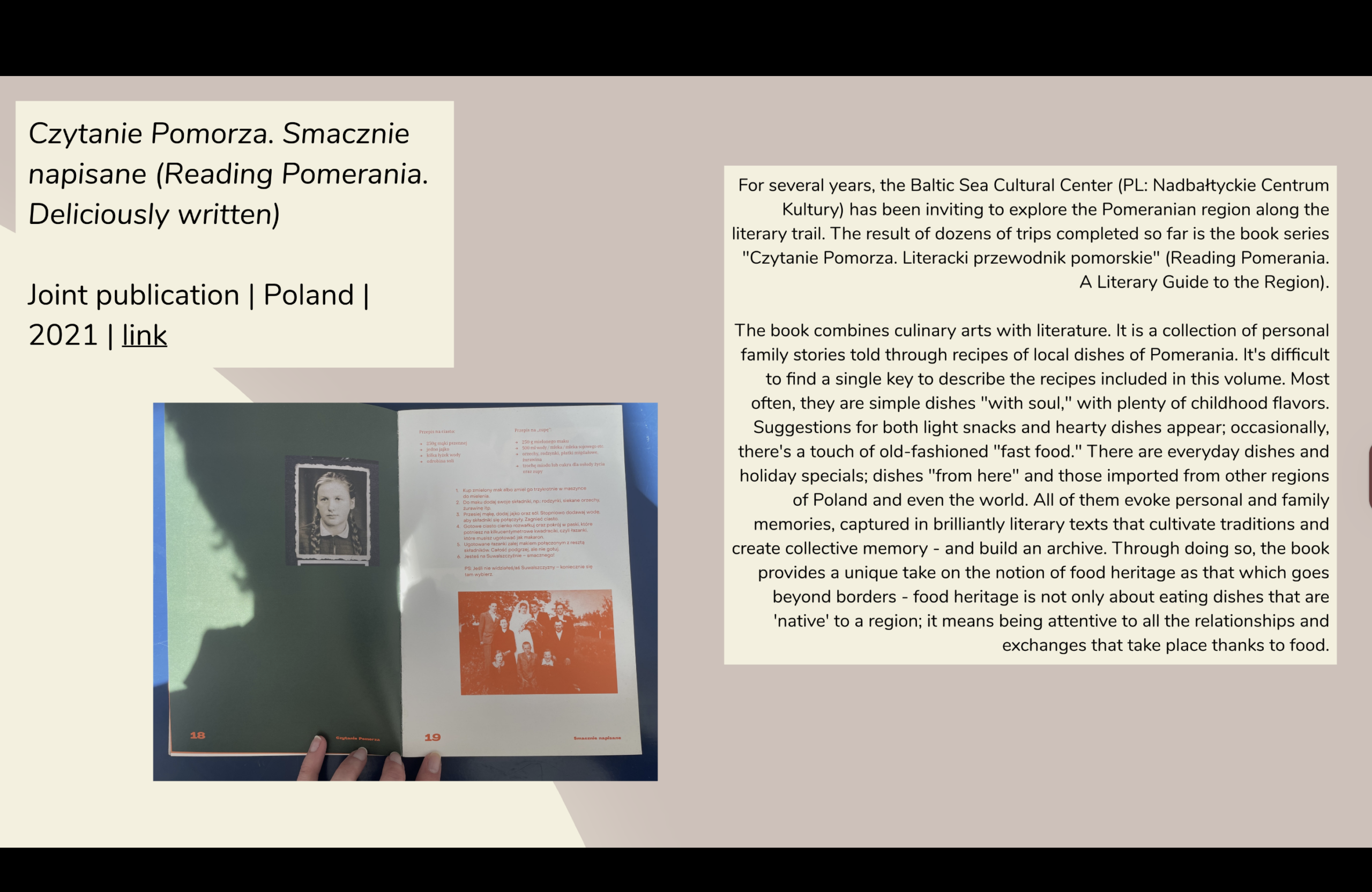
At the end of October (2025), we launched the first version of our Living Archive, developed as part of The Open Garden and organised according to the concepts we find key in CONVIVIUM. The solution is not only concerned with fieldwork; the work behind the Open Garden also includes research and exploration of narratives relevant to community gardening and community food. These we find in cultural works such as novels, movies, artworks, art exhibitions, projects, and ventures in (urban) spaces.
The appeal of food heritage lies in the space it provides for alternative conceptualisations of the value that food carries. Food heritage is not only about heritage ingredients, recipes, or traditional food-growing and dish-preparation methods or practices unique to a region. Food heritage also concerns how storytelling is used to understand, connect with, and influence our thinking about food.
We understand community food as encompassing gardening, cooking, eating and all other practices that concern the question of convivial food. We believe that developing a perspective that moves beyond community gardening allows for seeing the living heritage of that practice more holistically.
We propose The Living Archive as an inspiration hub for those engaging with community food initiatives and practices at the theoretical, analytical, and practical levels. Community gardening is not only about food growing but also about alternative ways of relating to food, community, coming together, creativity, and greater awareness of the dominant and ecologically damaging food sector.
The Living Archive, in its first version, can be accessed through the CONVIVIUM website (https://convivium-neb-project.com/library/). We hope that the exploration of this hub will provide inspiration and incentives for discussions – not only about community gardening, but food in the contemporary moment.