RECONSTRUCTING EVERYDAY LIFE IN THE MONASTERY OF SANTA CRUZ
The CONVIVIUM project seeks to recover this human dimension, using technology as a tool to reconstruct and re-inhabit the monastery’s food heritage.
Our work brings together historical research, archival analysis, spatial archaeology, and digital 3D reconstruction. The aim is not only to show what the monastery looked like, but how life was actually lived within it: how meals were taken, how food was served, which objects were used, how daily duties were organized, and what silences shaped communal coexistence.
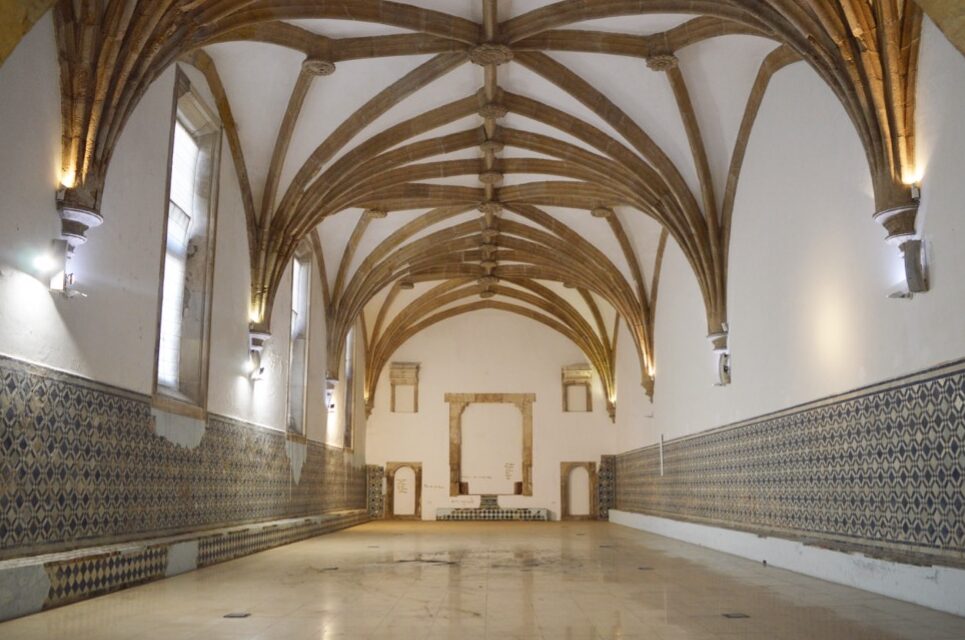
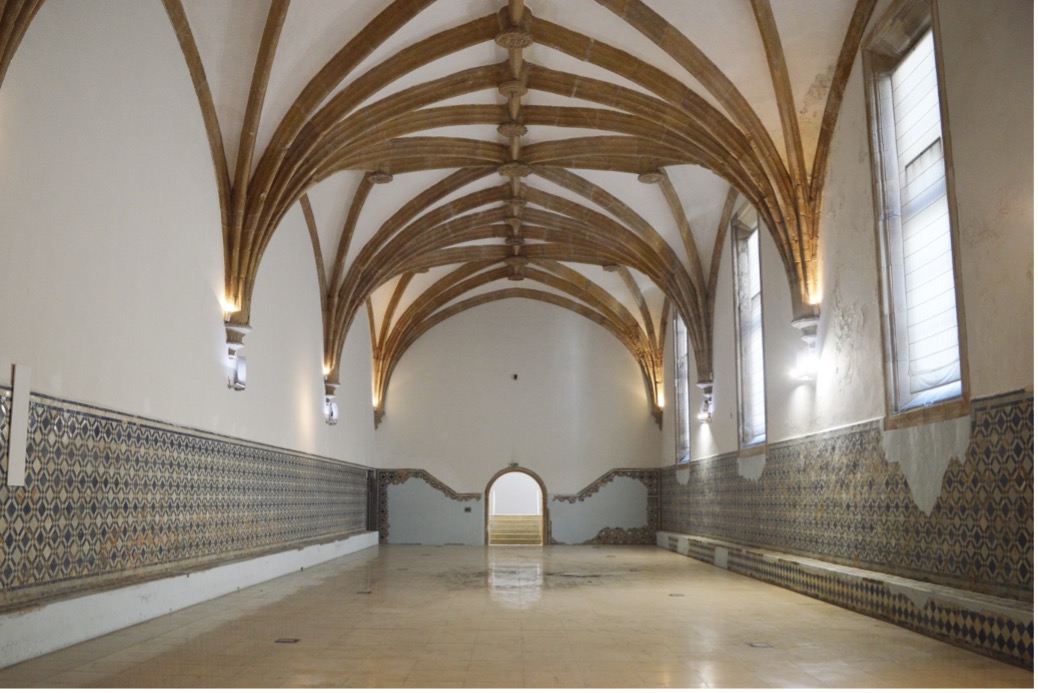
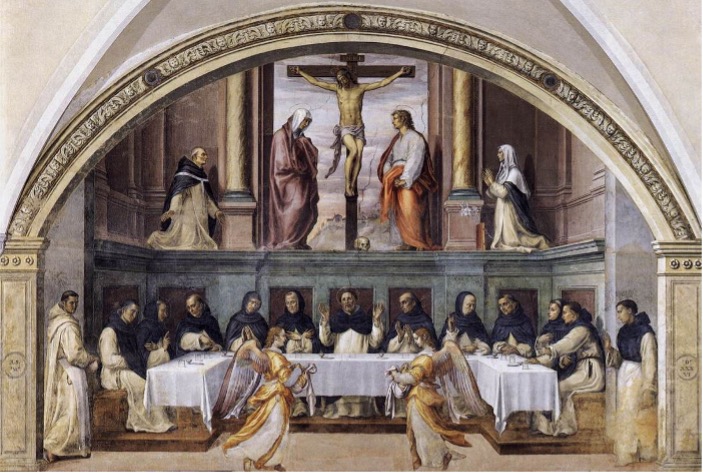
One of the central spaces in our study is the refectory, the hall where the canons gathered twice a day to eat. Historical sources reveal a carefully structured spatial order, in which the arrangement of the tables and the position of each person followed precise hierarchies. The principal table, facing a niche depicting the Last Supper, stood on a raised wooden platform, emphasizing its symbolic prominence. The remaining long tables, carved in white stone, were covered with cloths that reached the floor, concealing their decoration. What mattered was not display, but ritual.
Meals were served in silence, always accompanied by the reading of texts from a pulpit. The tableware was modest: white glazed ceramic plates, green-tinted glass cups, and pewter jugs for water and wine shared between pairs of diners. Etiquette—how to hold the cup, how to break bread, how to sit in relation to others—was an integral part of spiritual discipline.
These practices shaped not only the act of eating, but an entire culture of care, time, community, and the relationship between body and soul. Through them, we understand how food was central to religious life.
Our team is currently developing immersive 3D visualizations that will allow visitors to explore these spaces as they might have appeared centuries ago; these will soon be available to the public.
At the same time, we are working on other key areas connected to the refectory—such as the kitchen, pantry, the Casa das Ministras, and support rooms—where objects and hands enabled the shared act of eating.
CONVIVIUM is not only about reconstructing stone and furniture. It is about restoring experiences: the sound, the pause, the shared table, and the living memory of food as a social bond.
Photos:
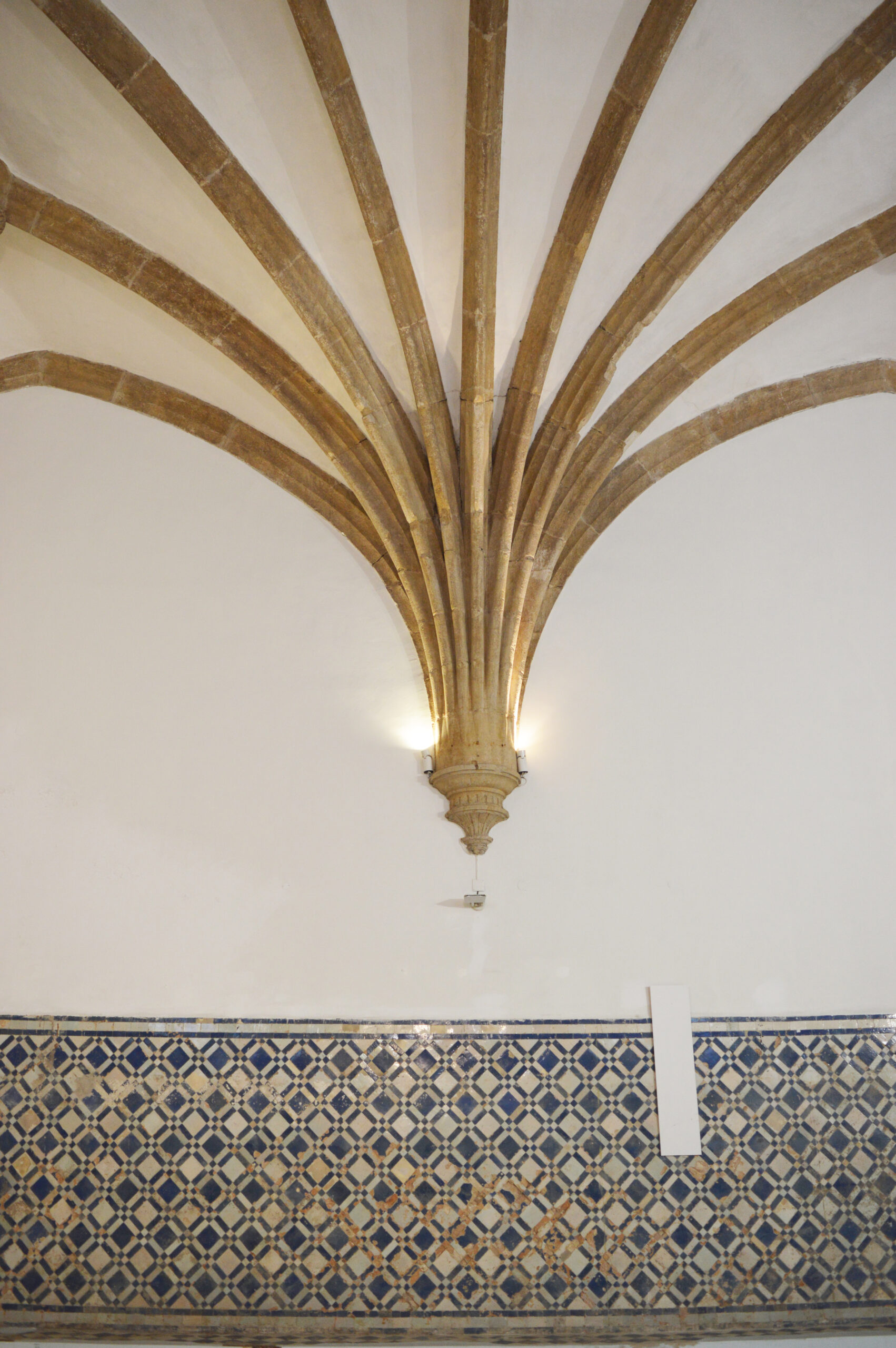
Refectory of the Monastery of Santa Cruz, Coimbra, Portugal, currently Sala da Cidade.
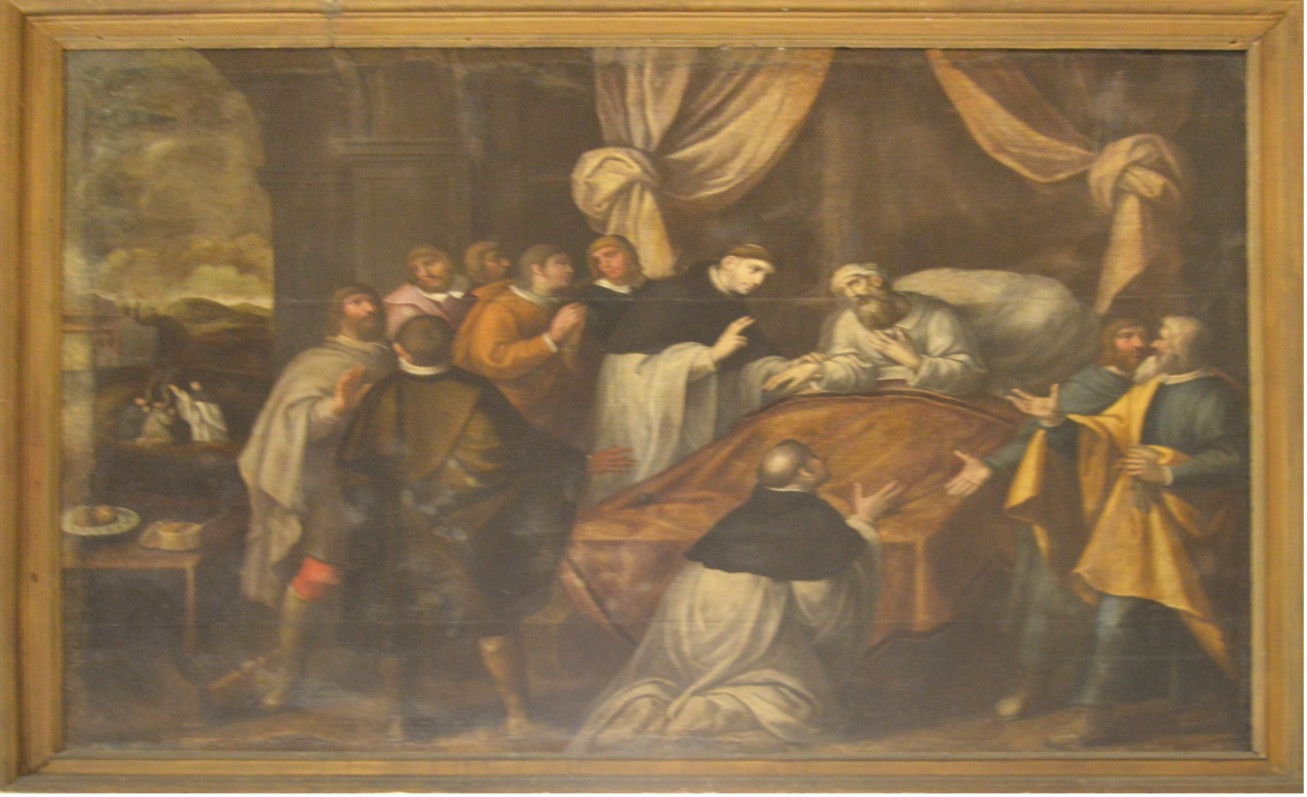
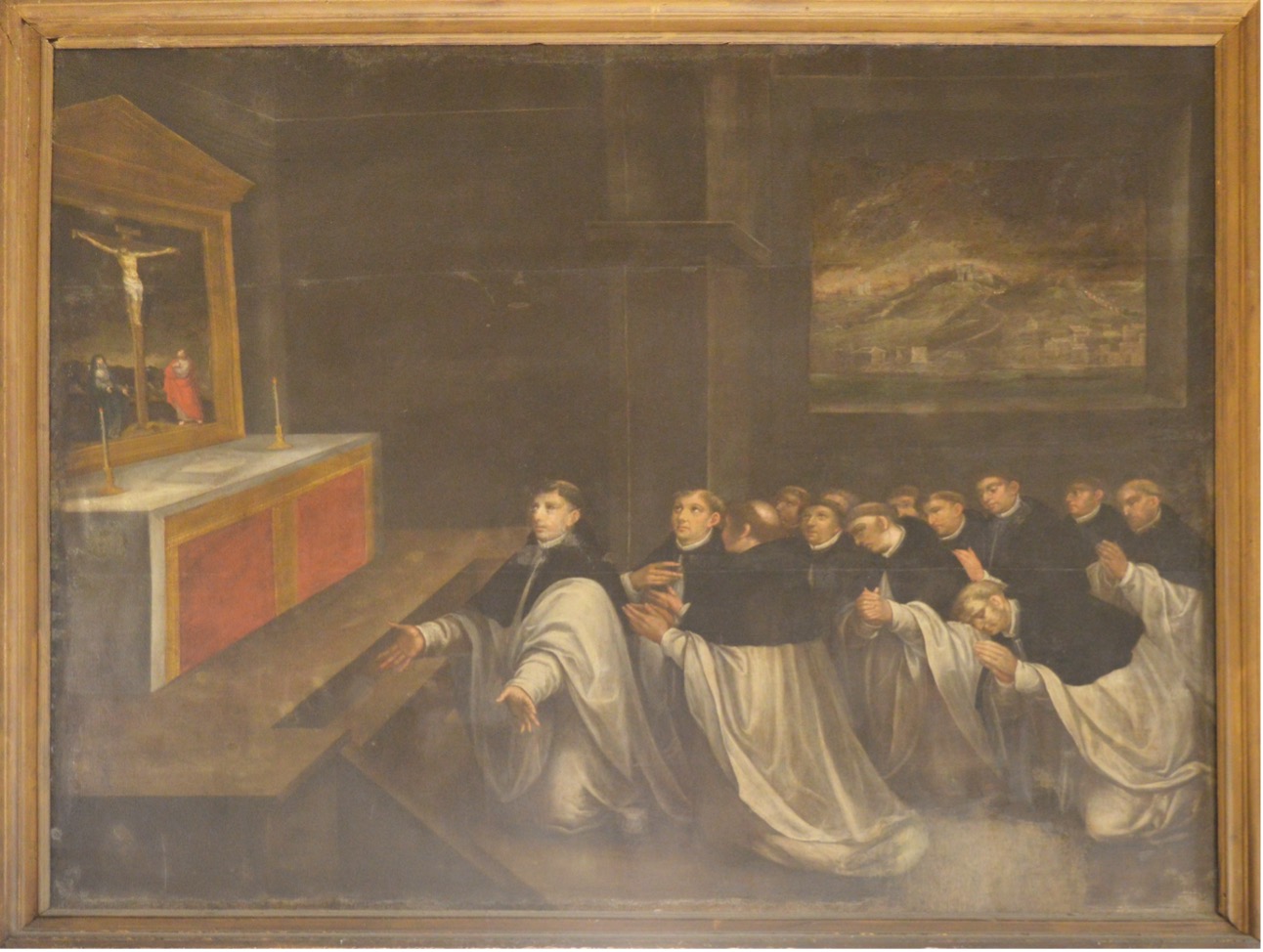
17th-century painting with regular canons.