RECREATING MONASTIC DRESS FOR THE VIRTUAL REFECTORY OF SANTA CRUZ DE COIMBRA
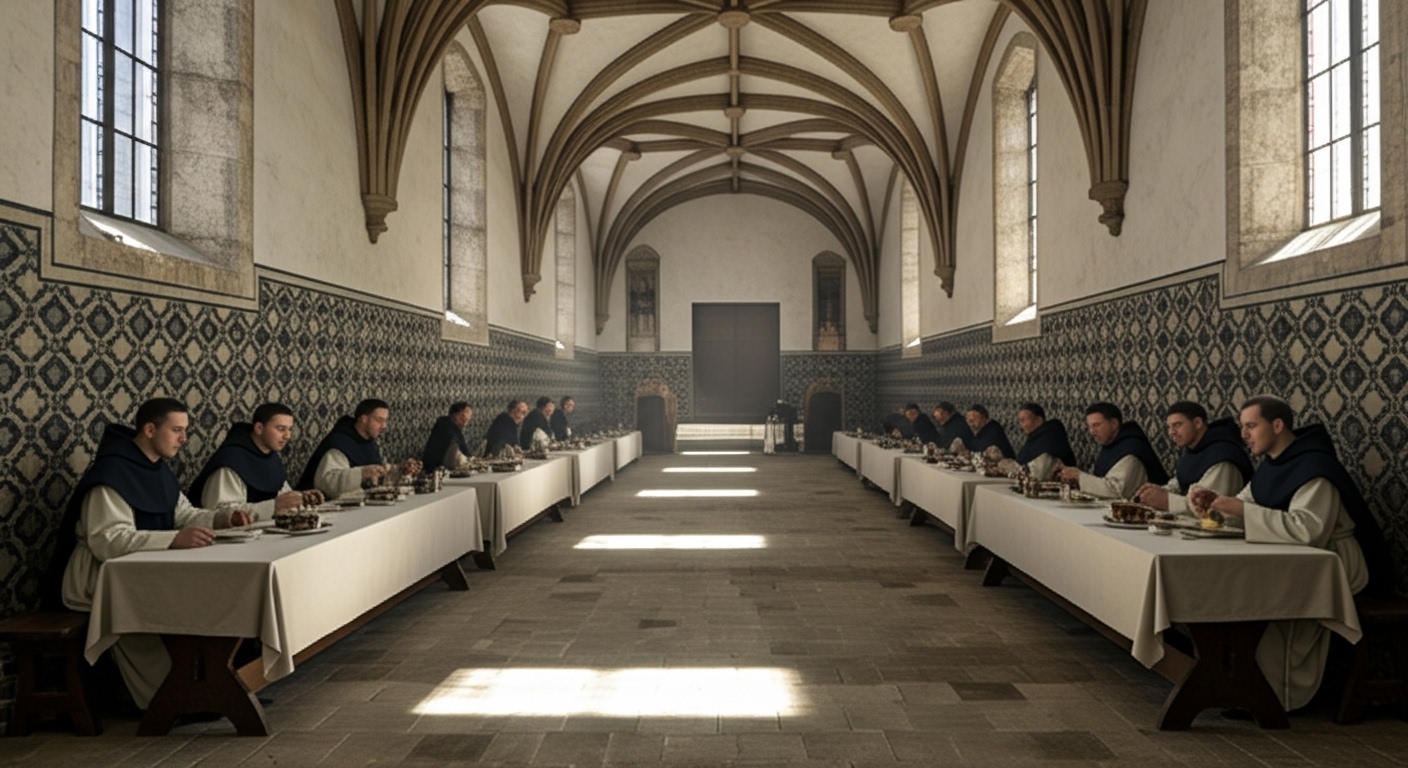
At CONVIVIUM, our work continues to progress on one of the project’s most significant immersive experiences: the virtual reconstruction of the refectory of the Monastery of Santa Cruz. At this stage, our focus is on the digital figures that will inhabit the space—monks who cook, eat, serve food, and interact as part of their daily monastic routine.
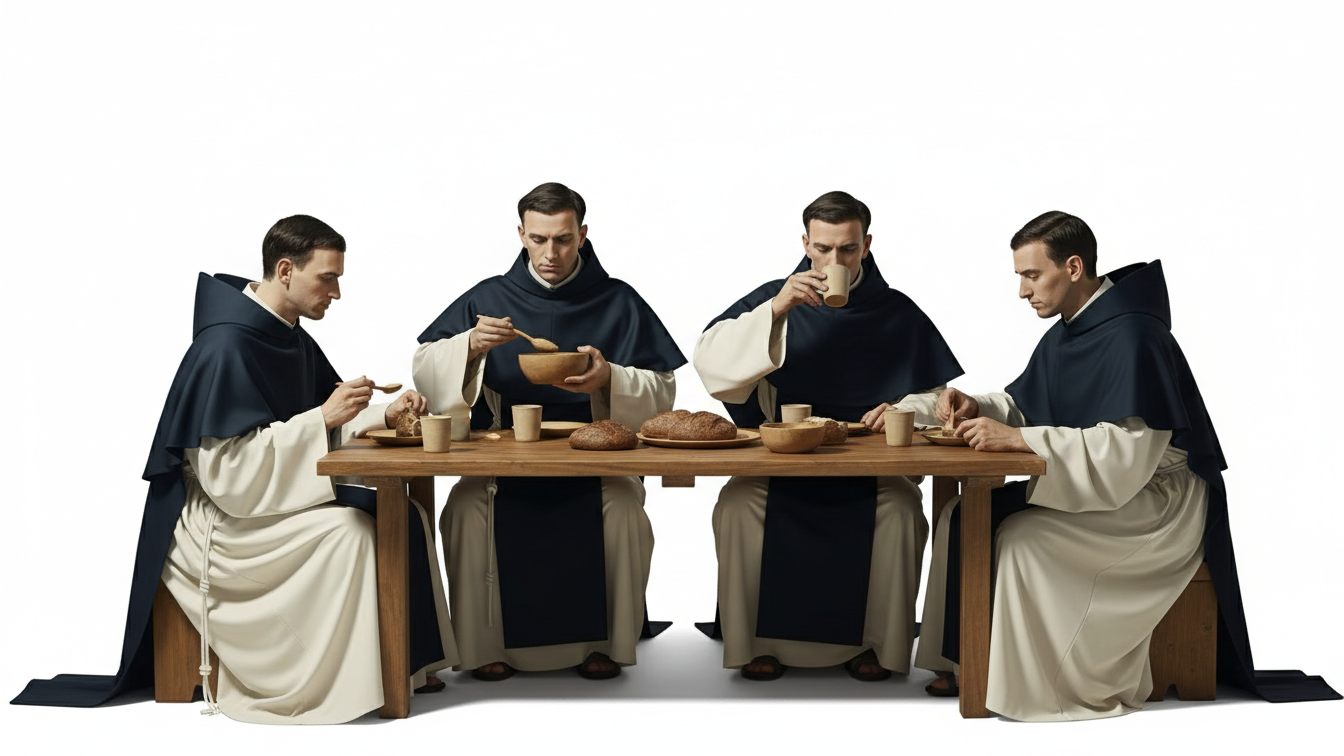
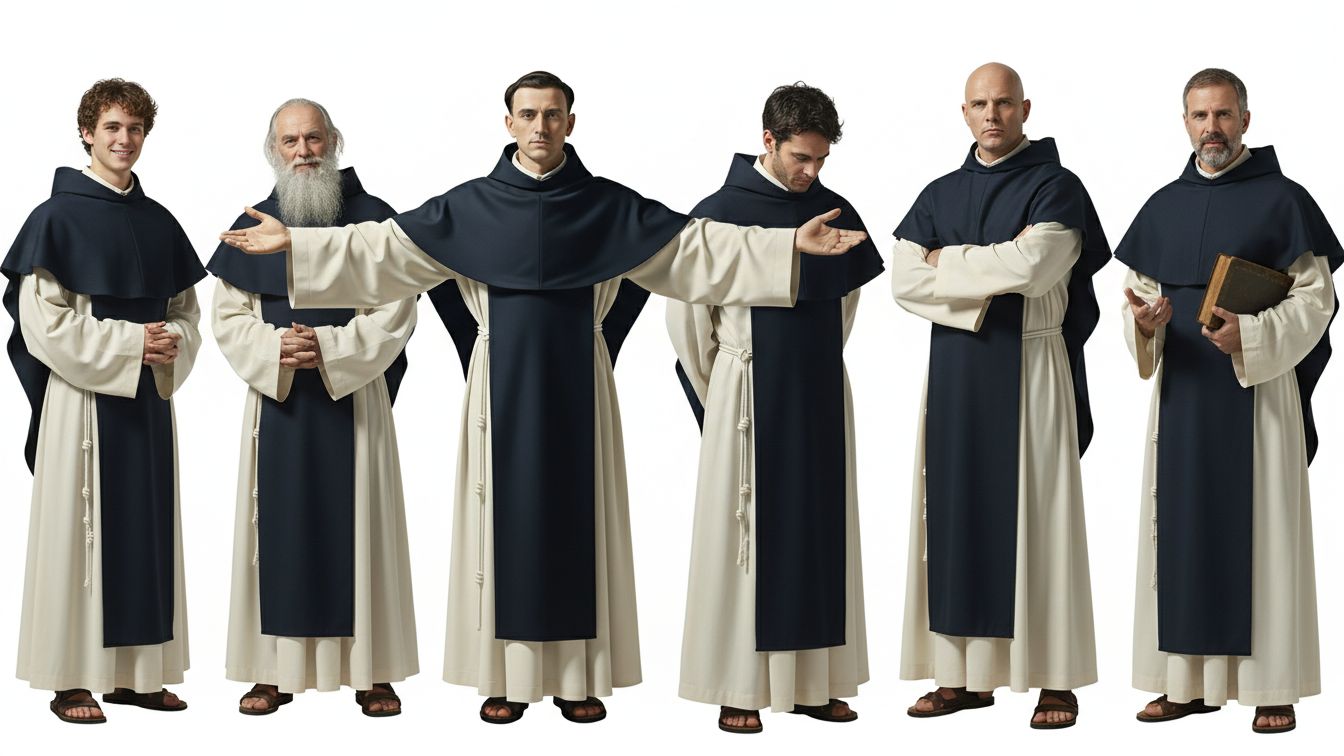
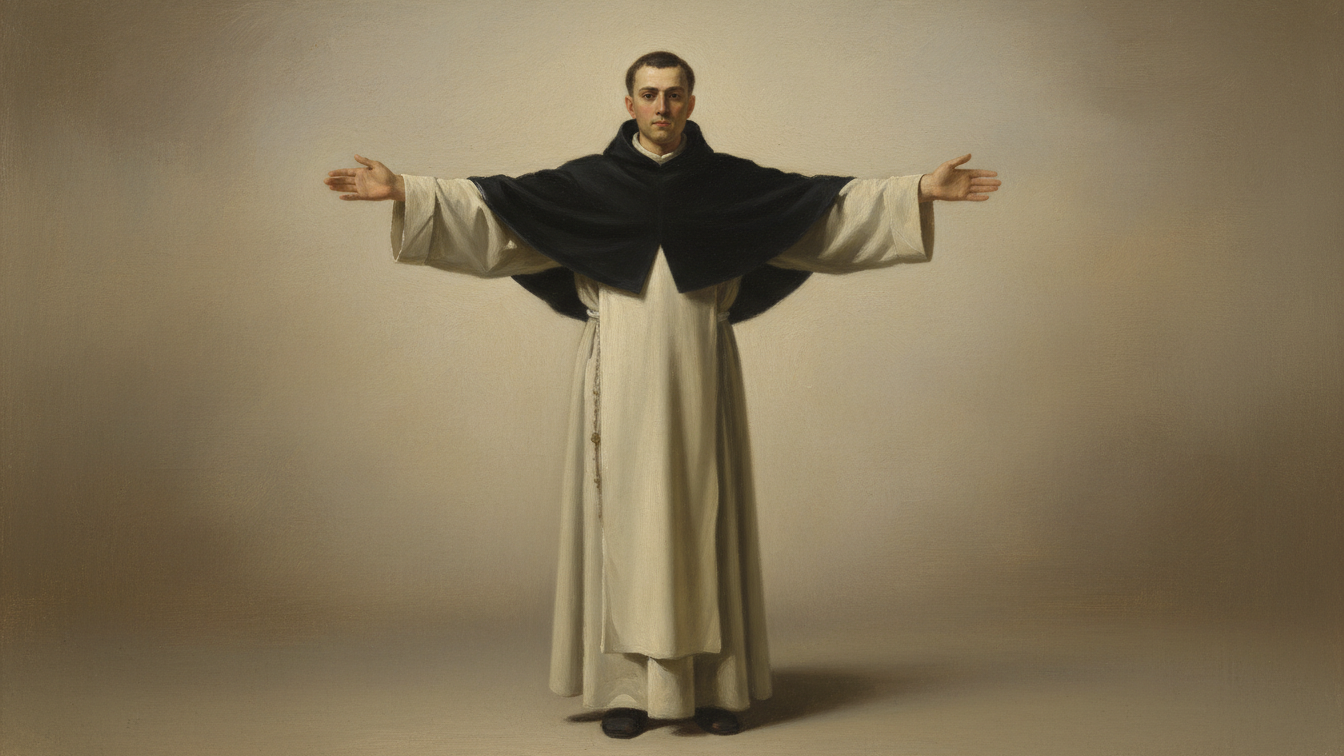
Clothing plays a crucial role in this process. It is far more than a visual detail: it conveys time, hierarchy, discipline, and identity. If the garments are wrong, the entire experience loses credibility. For this reason, the recreation of monastic dress has been approached with the same level of rigor as the architecture itself.
Understanding the monastic community of Santa Cruz
The Monastery of Santa Cruz de Coimbra was inhabited by the Canons Regular of Saint Augustine, whose way of life combined communal religious discipline with teaching and service. Their rule, daily rhythms, and material culture shaped how spaces such as the refectory and kitchen were used—and how the monks themselves appeared within them.
From historical sources to AI-generated garments
Once the order was clearly identified, we began a detailed study of historical sources: engravings, paintings, manuscripts, and period illustrations depicting Augustinian canons between the 16th and 17th centuries. These references formed the basis for the next phase of the work, where artificial intelligence became a powerful ally.
Using AI tools trained to interpret and generate visual content from historical references, we produced multiple iterations of monastic garments. Habits, cloaks, tunics, fabrics, and colors were tested and refined, always cross-checked against the historical material. AI allowed us to iterate quickly, compare alternatives, and reach a level of visual precision that would be extremely time-consuming using traditional methods alone.
Importantly, this was not an automated process. Historical research guided every decision, while AI accelerated and expanded our creative and analytical capacity.
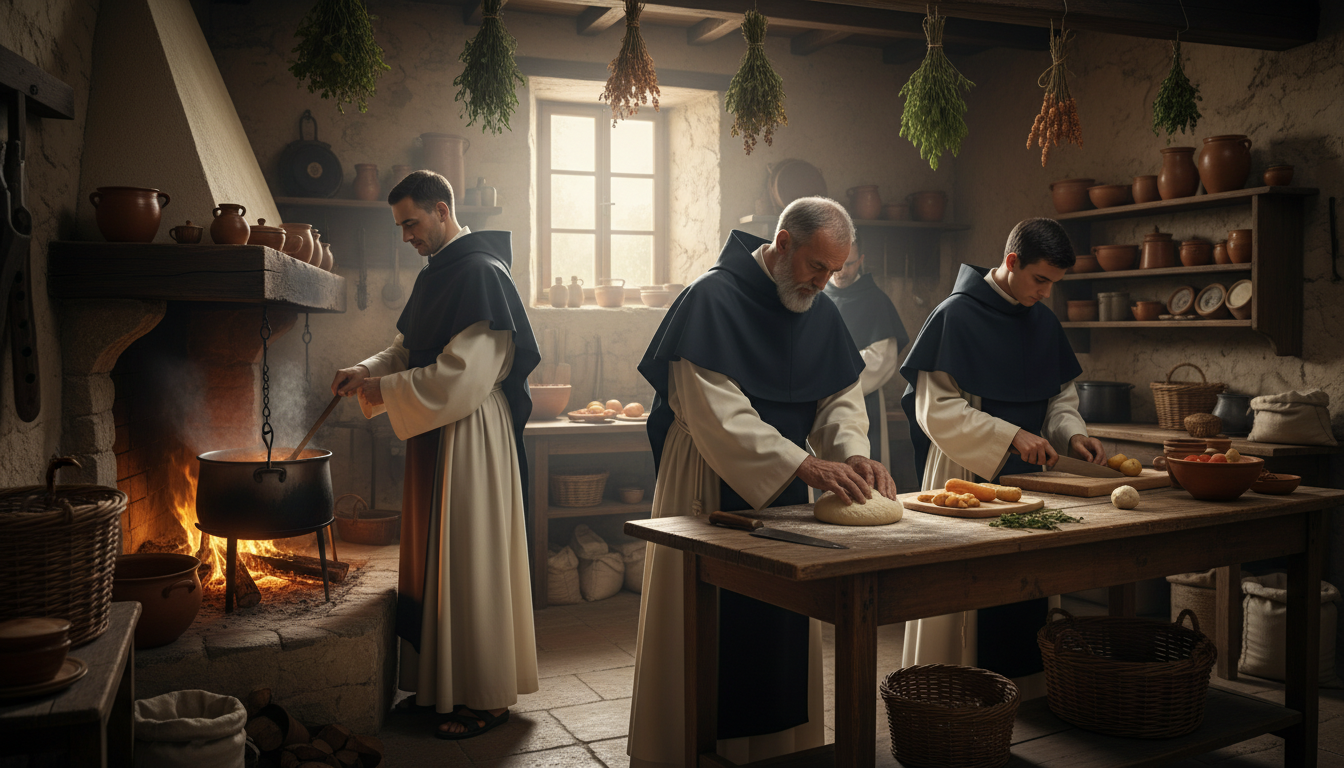
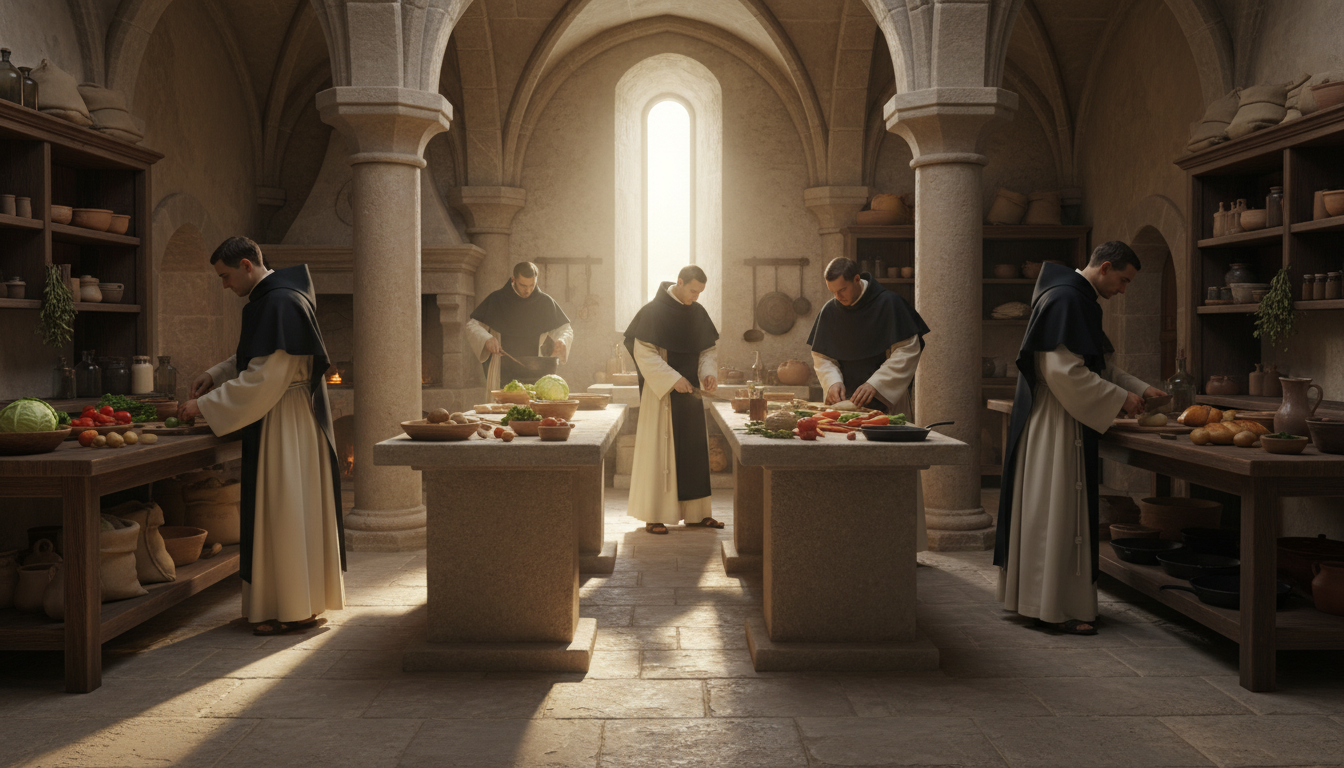
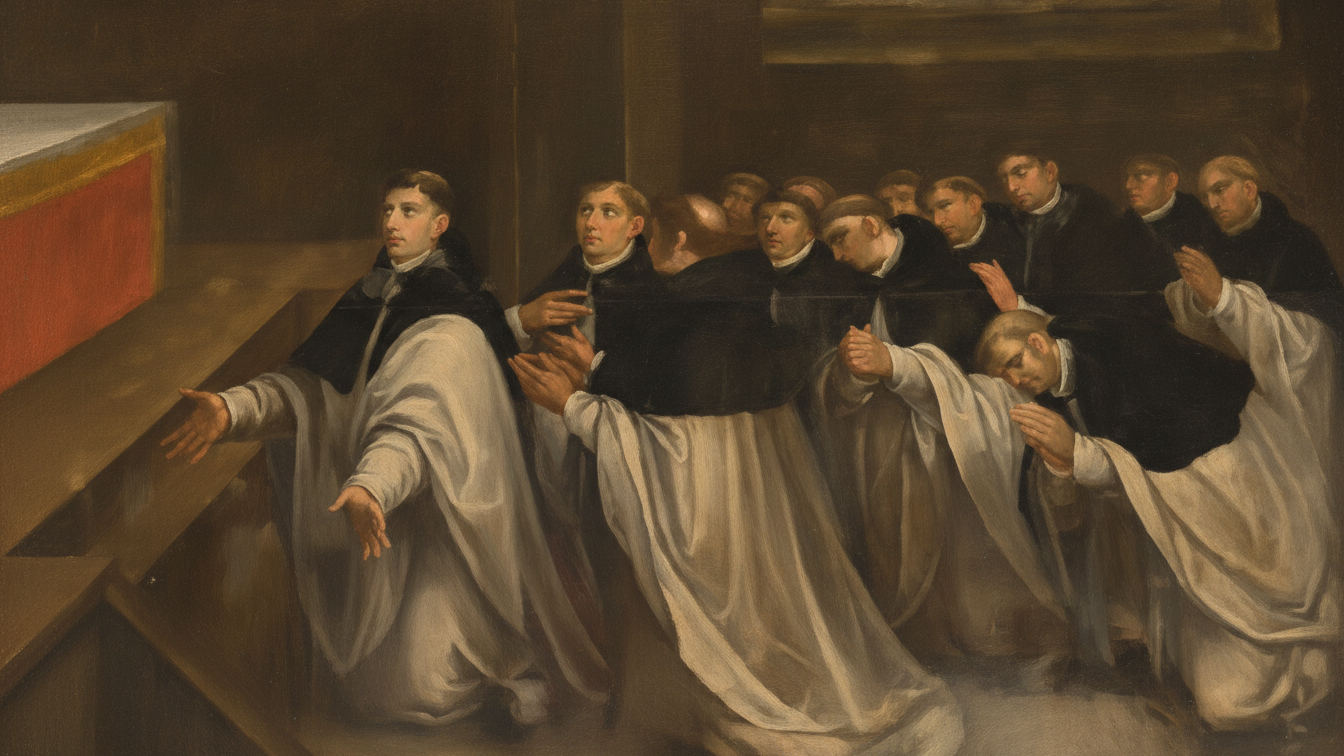
Monks in action: building living scenes With the garments defined, the next step was to place the monks within the architectural spaces of the project. Rather than static figures, we wanted to portray real, documented activities connected to food heritage and daily life in the monastery.
We developed several digital scenographies showing monks preparing food in the kitchen, serving meals, eating together in silence, and interacting within the strict discipline of monastic life. These scenes help transform the refectory from an empty architectural shell into a living environment, full of meaning and social context.
From images to 3D models for the virtual tour
The final stage of this workflow involved converting these AI-generated scenes into fully usable 3D character models. Using specialized AI-driven pipelines, the monks were transformed into optimized 3D assets, ready to be integrated into the virtual tour of the refectory.
These models are carefully designed to match real scale, lighting conditions, and spatial proportions, ensuring they blend seamlessly with the reconstructed architecture and enhance immersion rather than distract from it.
A precise reconstruction through technology and research
This process reflects the core philosophy of CONVIVIUM. By combining rigorous historical research with advanced digital technologies, we are able to offer a reconstruction that is both visually compelling and academically grounded. The result is not a static representation of the past, but a believable, human-centered experience that allows visitors to understand how these spaces were truly lived in.
Through this work, technology becomes a bridge—bringing us closer to the everyday realities of the past and allowing cultural heritage to be experienced with unprecedented clarity and depth.