FROM SURPLUS TO FOOD TREASURES: SURPLUS TABLE MEETS CONVIVIAL TABLE
What better way to end the CONVIVIUM gathering in Lofoten than by coming together around a table? But the Surplus Table is not about chefs cooking for guests.
On 26 June, we concluded our days together in Lofoten with Surplus + Convivial Table – From Waste to Multispecies Hospitality at Musikeren, community house in Svolvær.
There is always a special mixture of excitement and anticipation when preparing a Surplus Table. This time even more so: we were welcoming our fellow CONVIVIUM partners and wanted to show them how we work locally – not by presenting a finished concept, but by inviting them directly into the process.
Our setting was completely new to us. A new kitchen, unfamiliar equipment and a new room always bring surprises. How do we make the space welcoming? What can we use? How do we transform an empty community room into a place for cooking, experimentation, conversation and hospitality?
And, as always with a Surplus Table, there was another important unknown: We did not know what we were going to cook.
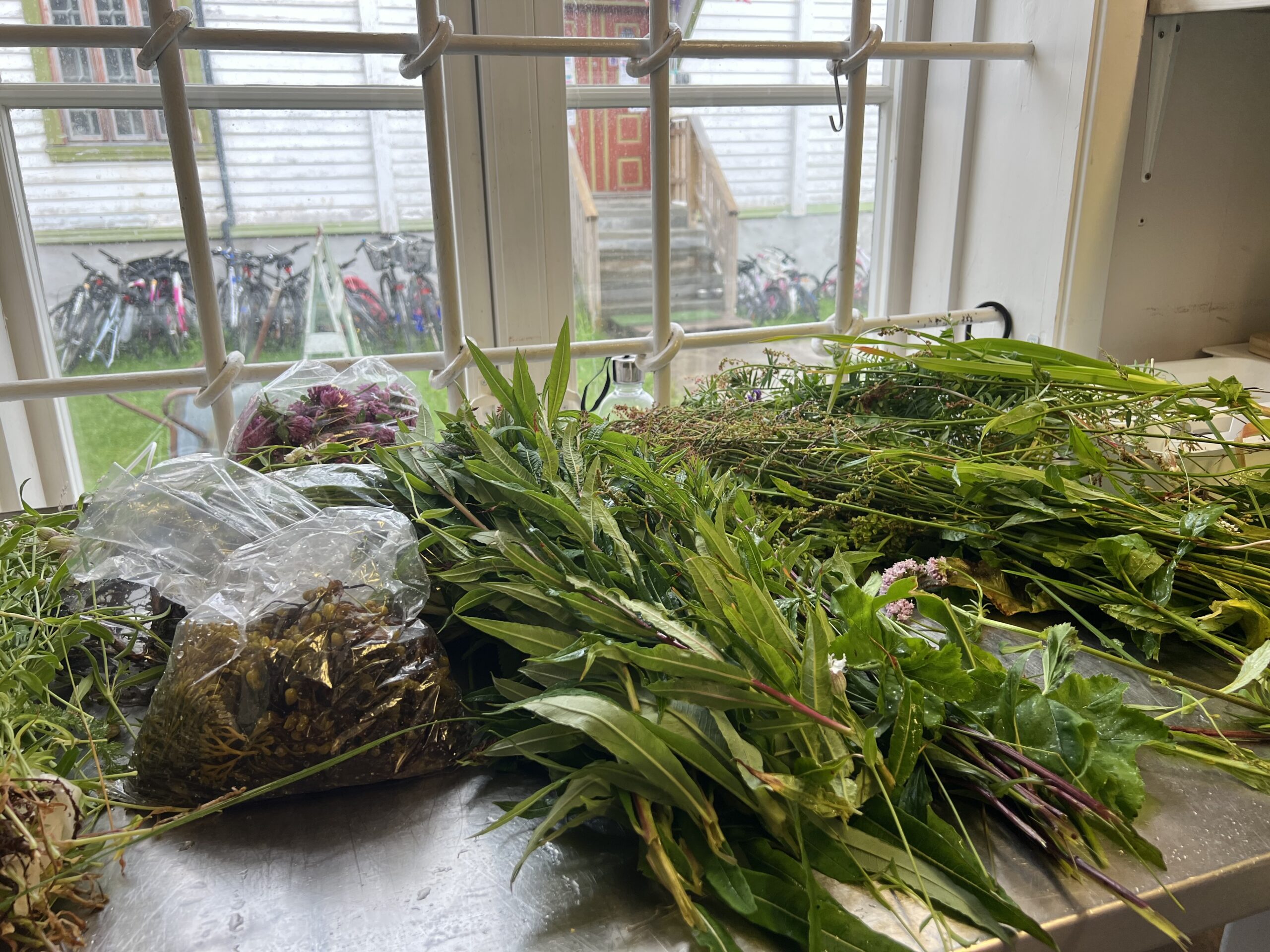
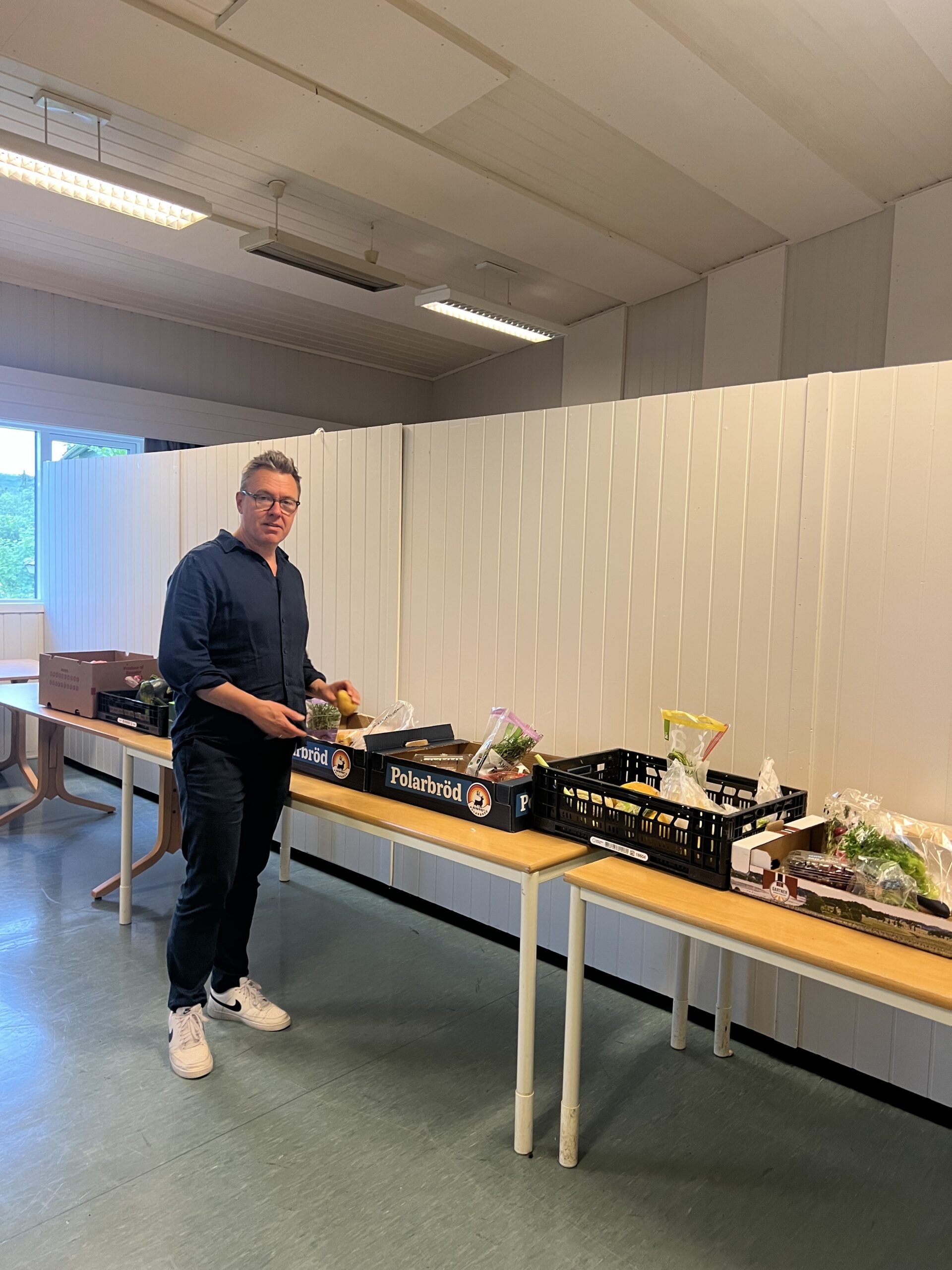
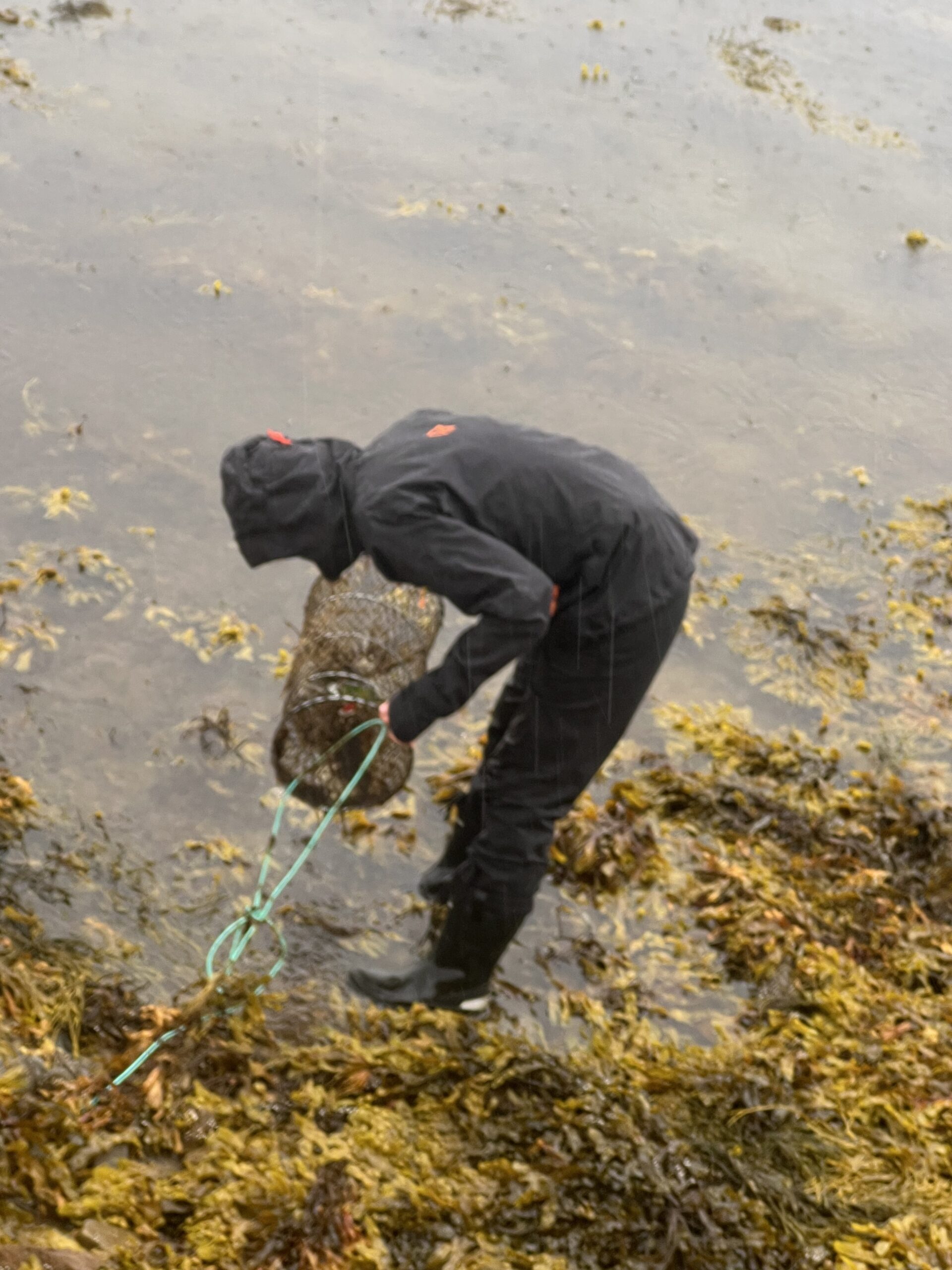
During the four days before the event, we collected surplus food from four local grocery stores with whom we had established agreements. At the same time, we went out into the Lofoten landscape and gathered 17 different wild edible plants, together with seaweed and shore crabs.
We also established a collaboration with Thon Hotel, which helped us store the rescued food while we explored together what the main course could become, based entirely on what arrived.
Then another unexpected ingredient entered the table.
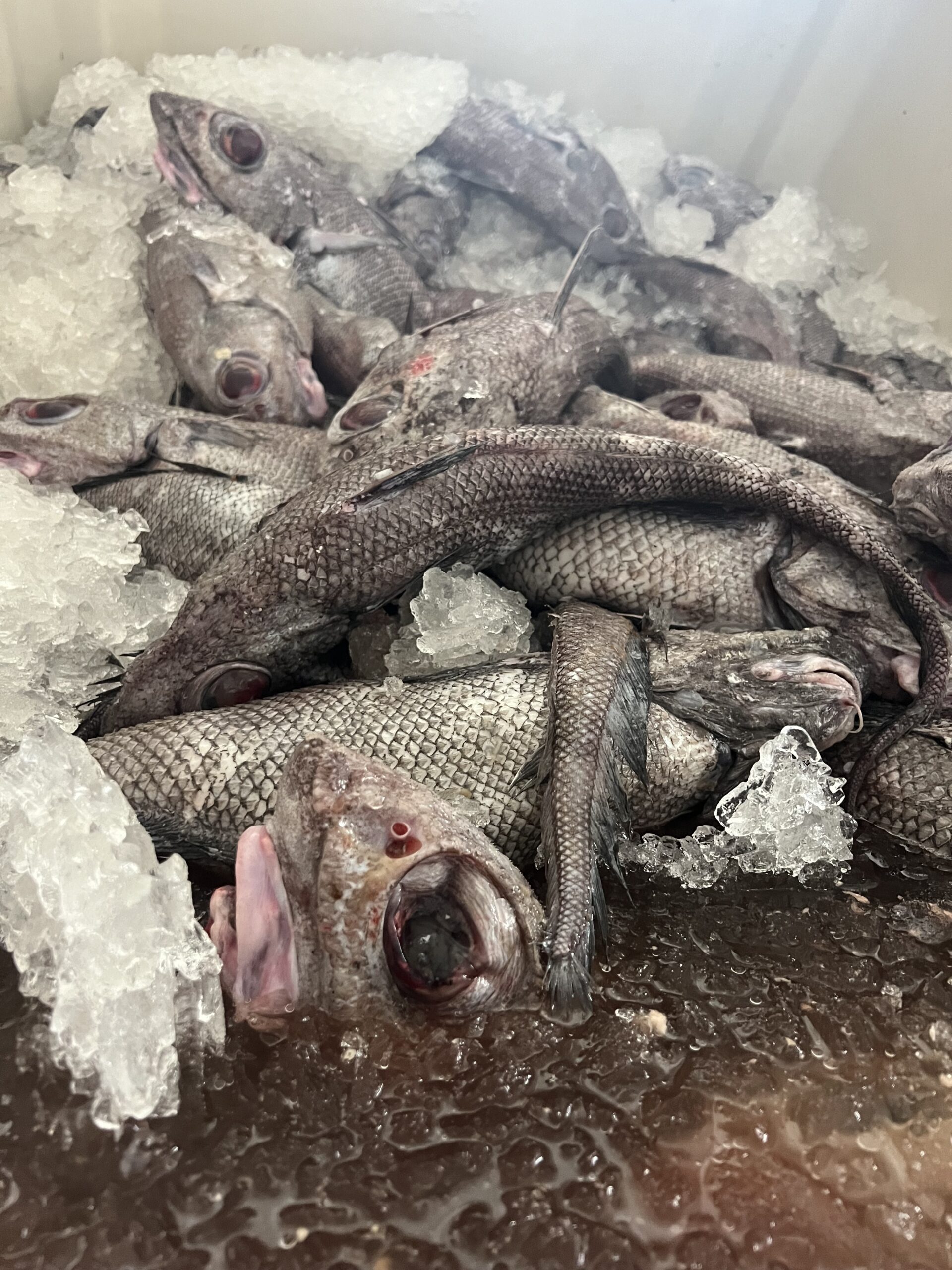
We were fortunate to receive isgalte, a locally caught bycatch fish that is rarely part of everyday food culture. Together with local women cooks and the hotel chef, it became the basis for a delicious fish soup. The hotel chef also combined the fish with surplus old bread to make a traditional fish pudding – a wonderful example of how two overlooked resources can meet through culinary knowledge and become something new.
Instead of starting with a recipe and buying the ingredients, we started with what was available and allowed the ingredients themselves to help determine the menu.
It was now up to the participants.
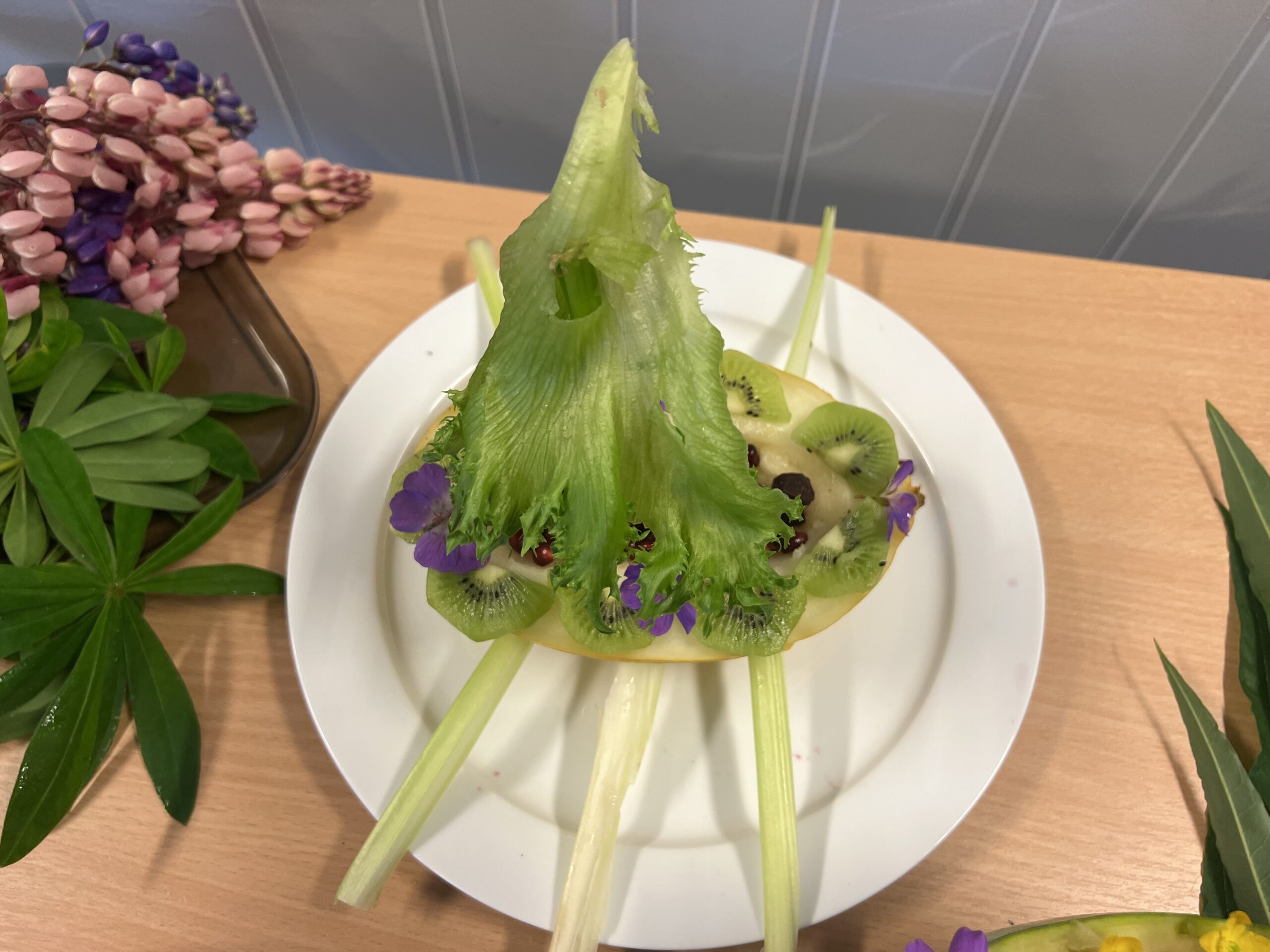
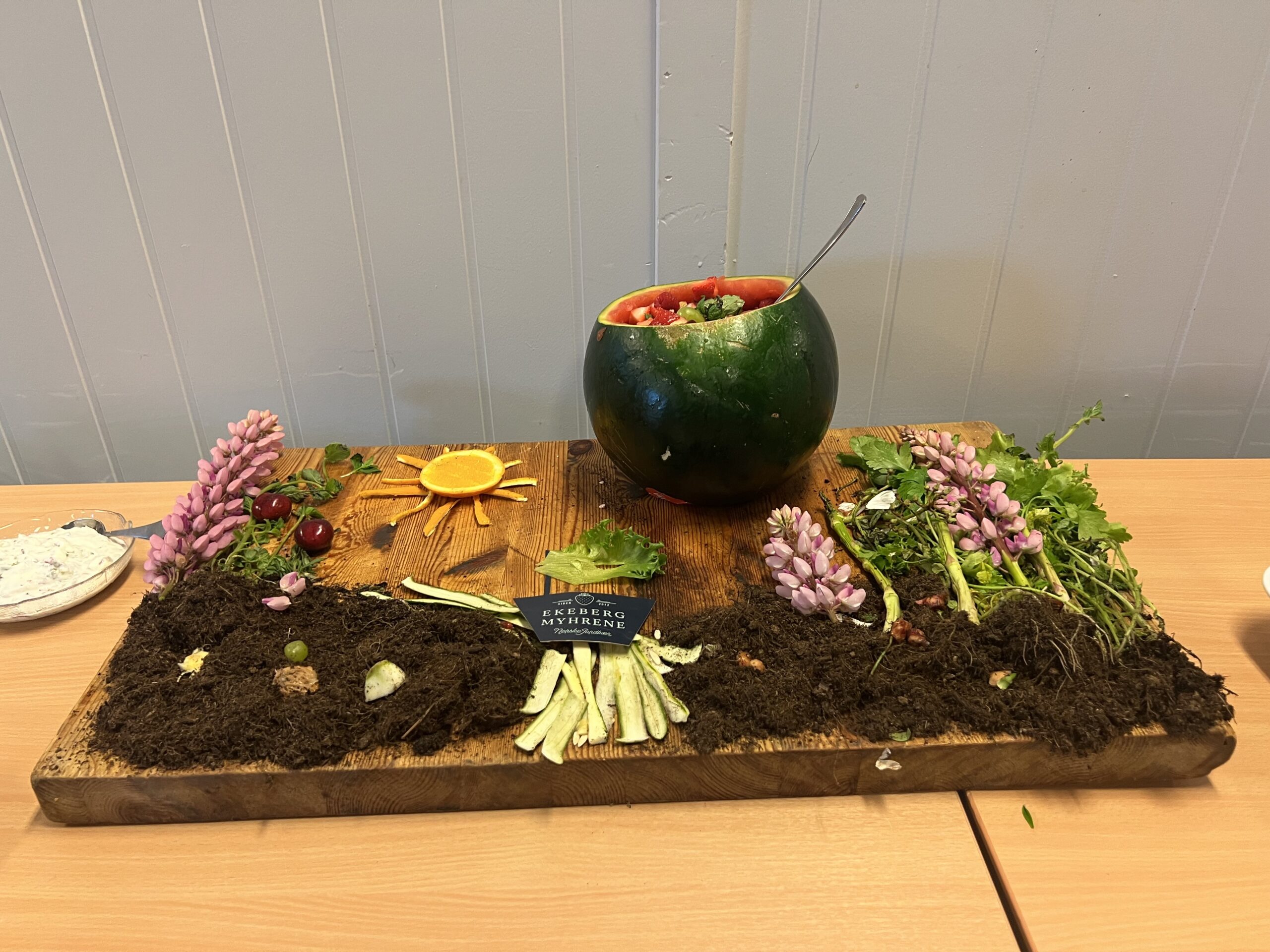
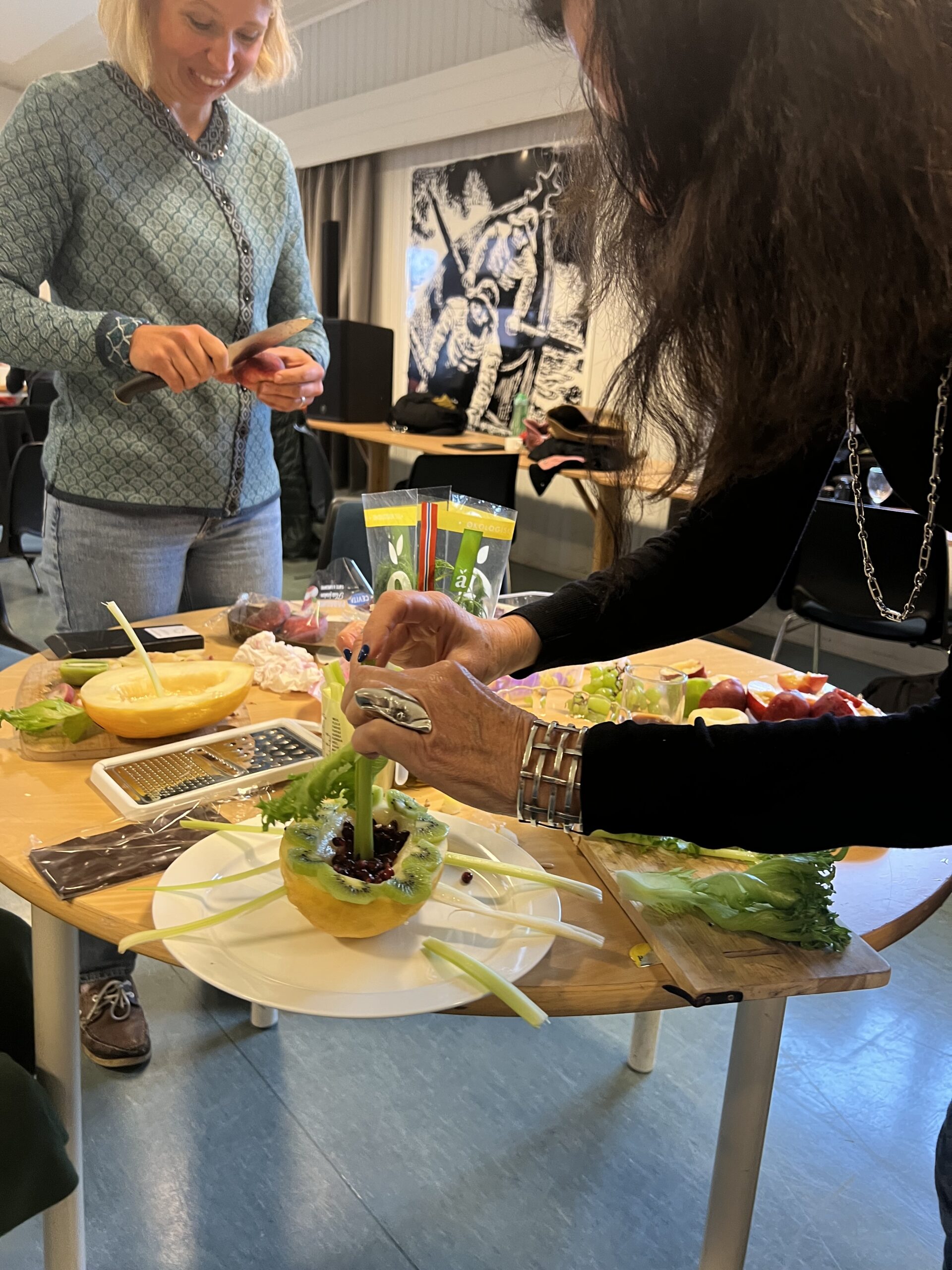
Everyone was divided into small groups and invited to choose ingredients from the rescued food displayed in the room. Their task was to create starters and desserts, share a personal food memory with their group, and continue building the edible installation as the afternoon unfolded.
The Convivial Table brought another dimension into the experience, inviting us to think beyond the human participants around the table. Through presentations, film and conversation, the more-than-human world became increasingly present: microbes, fermentation, decomposition, fish, plants, seaweed and the many other forms of life involved in transforming what we call food.
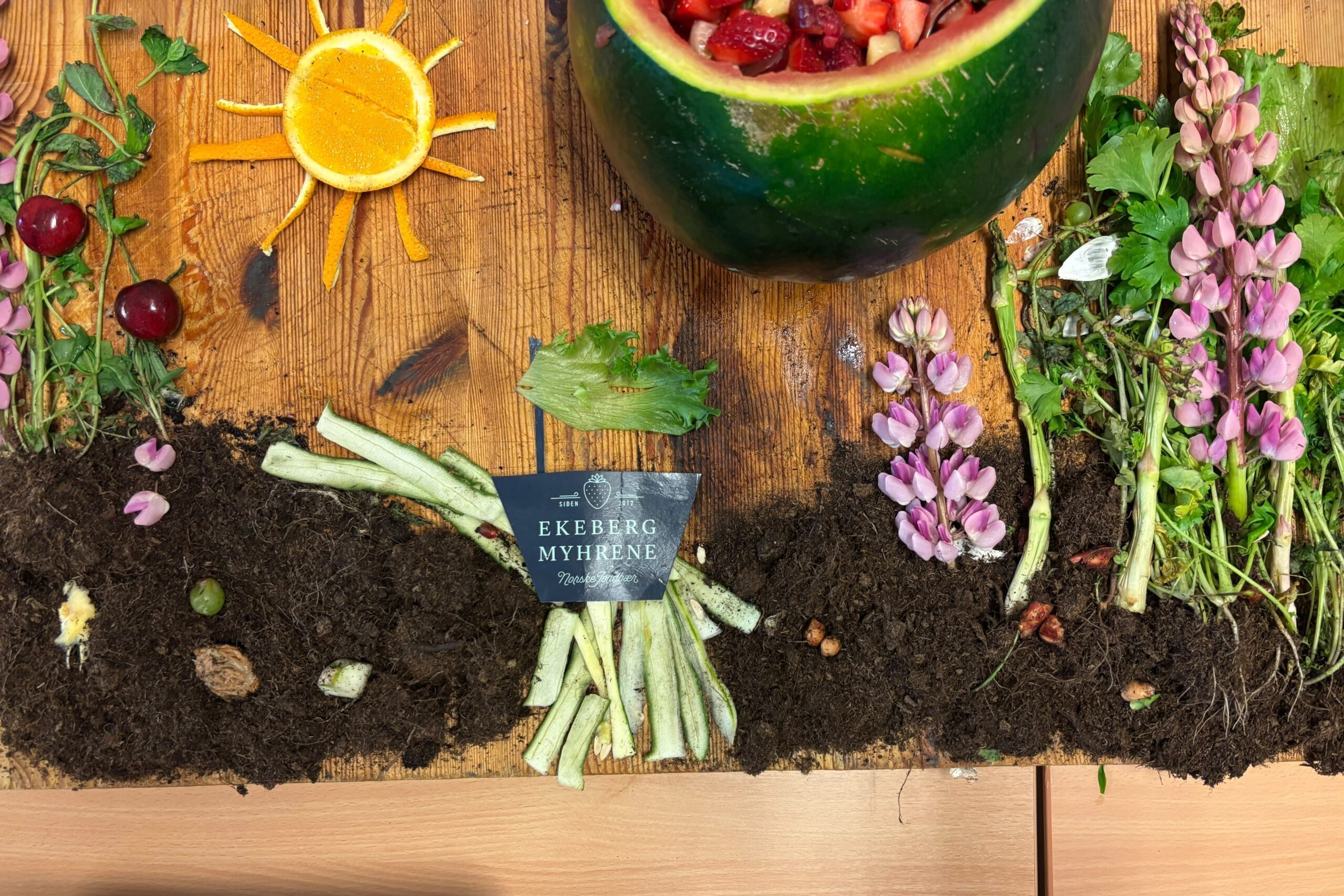
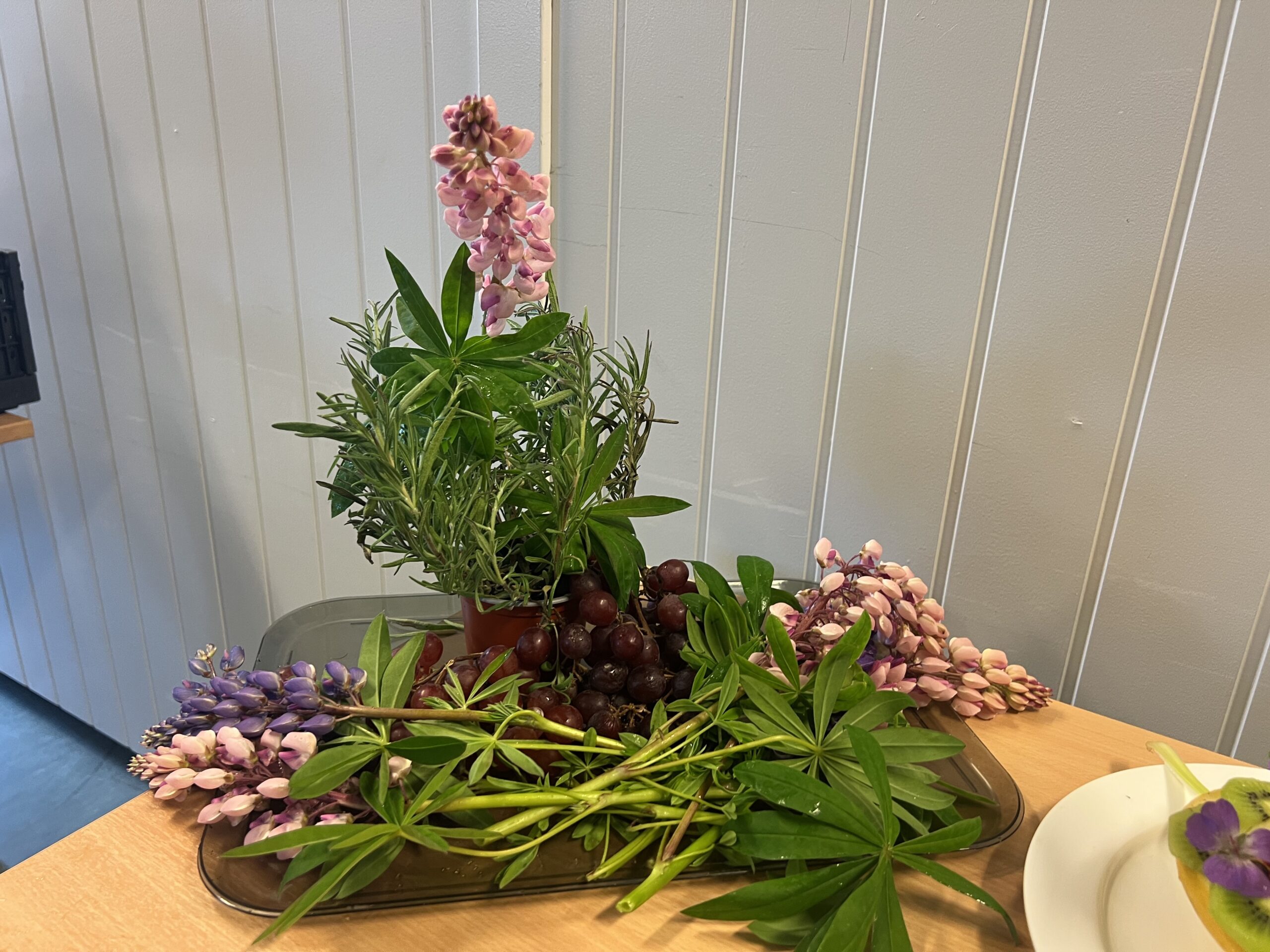
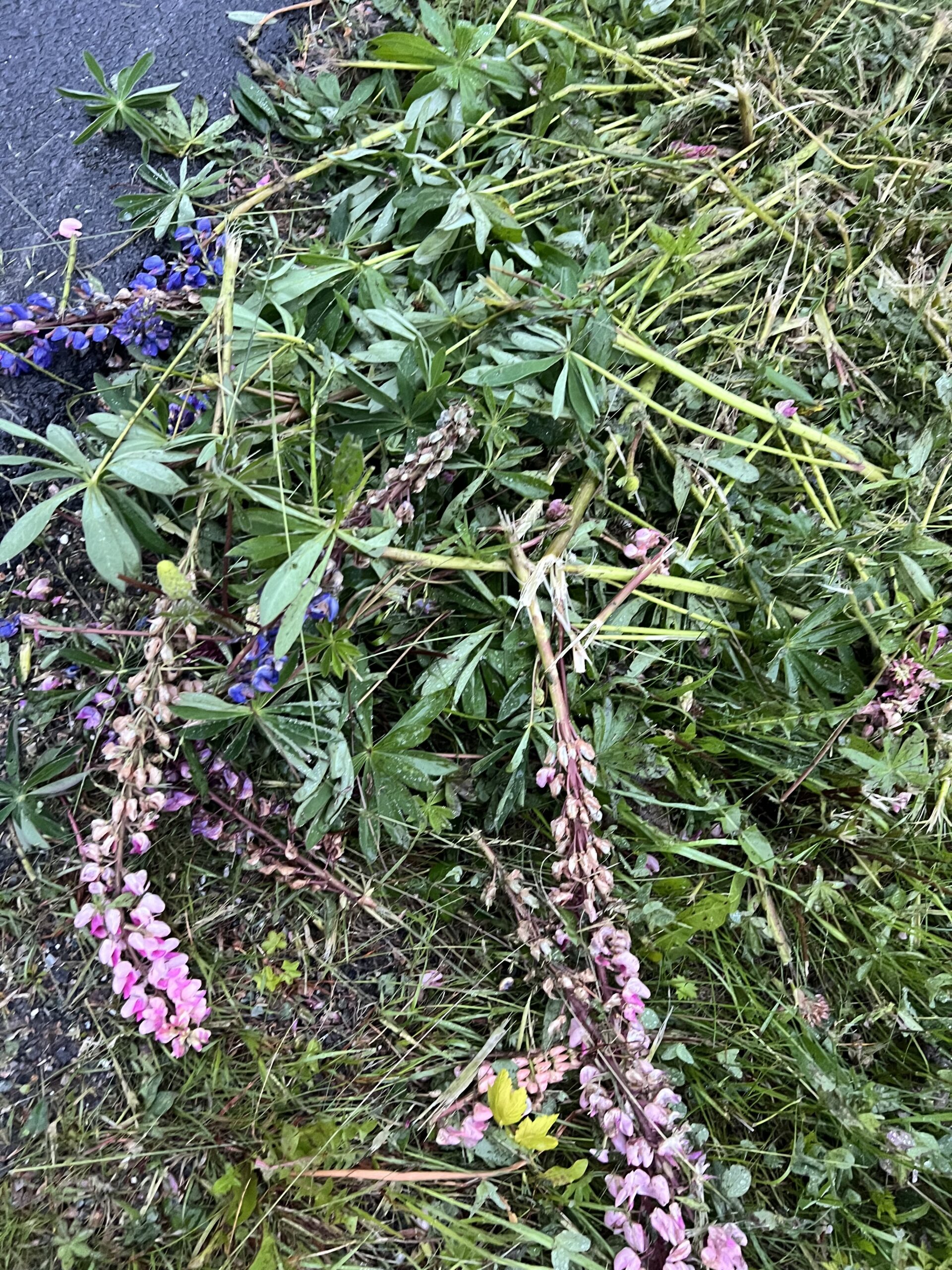
Even the decoration carried a story of surplus and place. Local summer flowers that had already been cut down and were lying along the roadside were gathered and given another temporary life. Together, we used them to transform the entrance and the area around the stage, allowing the experience of the table to begin before participants even reached the food.
And then came perhaps our favourite part.
The sound.
People laughing. Talking. Chopping. Tasting. Asking questions. Sharing memories. Helping one another. Cooking together.
For us, there are few sounds more beautiful.
At the end, we gathered around one shared meal and an exhibition of everything that had been created. The surplus ingredients that had filled the room at the beginning had disappeared into new dishes. What might have been considered waste had become new food treasures, mixed with old and new food memories, local knowledge, experimentation and encounters between people – and between species.
An especially important part of this Surplus Table was the participation of Folkekjøkken. They were not simply collaborators for one event, but part of building what comes next. Through the process, local knowledge, relationships with food suppliers and practical experience of organising Surplus Tables have been strengthened.
And now, Folkekjøkken is taking the baton forward.
This is an important part of what we hope the Surplus Table can achieve: not to create an activity that depends on the project remaining present, but to build enough local ownership, confidence, relationships and practical structures for the table to continue in new hands and find its own local form.
And there is one more part of the Surplus Table that matters to us.
When the meal is over, we clean up together.
The installation disappears. The tables are cleared. The kitchen is washed. The flowers are removed. The room gradually returns to its original form.
What remains is not the physical table itself, but the relationships, knowledge, memories and possibilities that were created around it.
And perhaps this was a fitting way to end our CONVIVIUM gathering in Lofoten: not by closing something, but by passing something on.
Another table can be set. New people can gather around it. New surplus ingredients can arrive. New stories can be shared.
That, for us, is what a Surplus Table can do: arrive temporarily in a place, work with what and who is already there, make room for unexpected encounters, share knowledge and responsibility – and then pass the table on.
Surplus + Convivial Table – From Waste to Multispecies Hospitality
26 June, Musikeren, Svolvær, Lofoten
CONVIVIUM – Surplus Table Task 5.3 + Convivial Table Task 5.1
Organised with Circular Ways, Institut Lyfe and Université Paris 1 Panthéon-Sorbonne, in collaboration with Folkekjøkken, Framtiden i Våre Hender Kabelvåg, Thon Hotel and local partners.